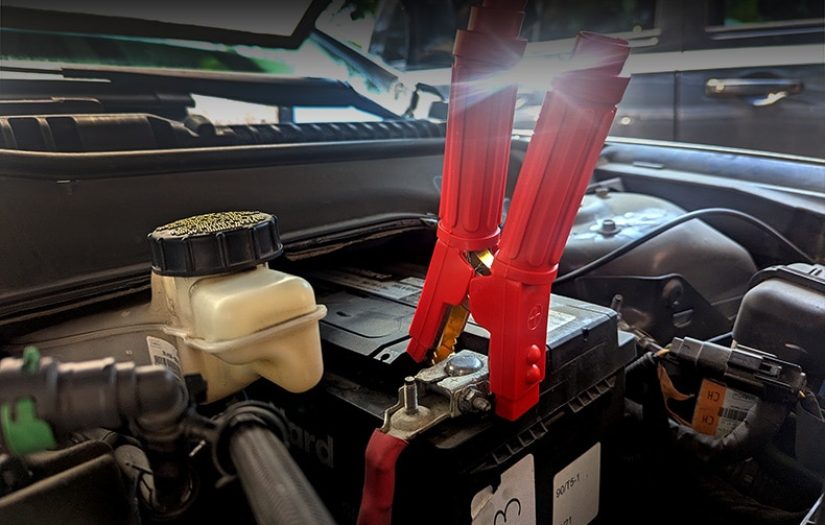
It was great to see so many of our technician friends at the recent Vision Show in Kansas City (of course, we love it when a show is right in our backyard, which almost never happens). We had many great conversations at the show around starting, charging and maintaining batteries. One of the most common topics we got into was Peak Amps. Those conversations were so common and so in depth that we thought we’d share our thoughts on the topic here.
Peak Amps – One Power Value, But Not the Whole Story

Peak Amps are a great starting point when it comes to assessing if a jump starter is capable of meeting your needs. After all, each user’s needs are different when it comes to a jump starter – are you purchasing one to help you avoid a potential hassle of a future dead battery as vehicle owner or are you purchasing one because you run a roadside recovery business where you could perform 8-12 jump starts per day for your customers?
Peak Amps is loosely defined as the total potential current available from a specific jump starter, i.e. if you shorted the clamps, etc. (which we do not recommend doing). But, as we like to say, Peak Amps don’t start vehicles. It is a transitory value that is fleeting (as in micro seconds) and, therefore, has no relation to or any significant influence over the starting application other than as an indicator as to whether the unit is powerful enough to get the starting event initiated.
There’s also a big catch: Peak Amps has no industry-agreed definition, so one company’s Peak Amp value may or may not be equivalent to another company’s Peak Amp value. So, from our point of view, Peak Amps are like pixie dust. One minute they’re here, the next minute they’re there. We rate our products with a Peak Amp value because the market demands that we do. But, we also provide a more substantive power value in addition to Peak Amps to help our customers truly understand how powerful each of our units are in the real world.
Cranking Amps / Starting Assist Amps
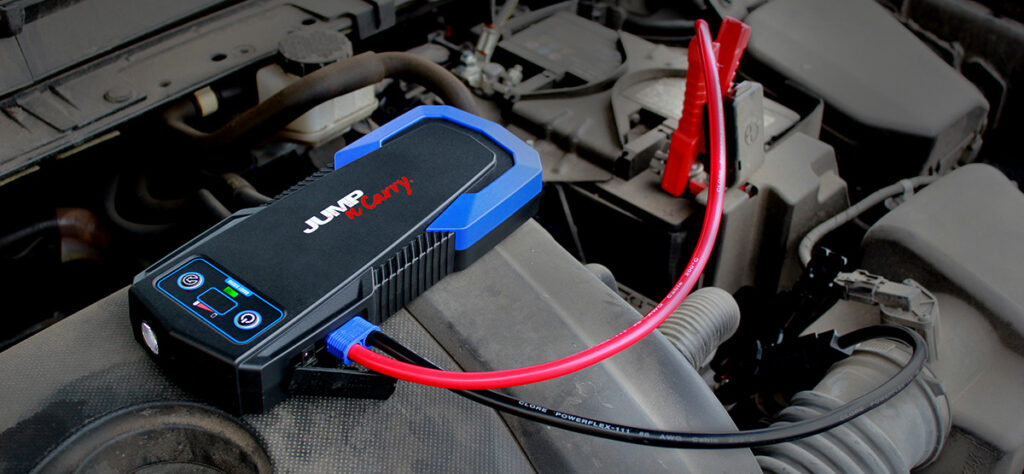
We rate all of our Sealed Lead Acid AGM (SLA AGM) battery containing units in Cranking Amps (CA). This rating has a very specific definition as established by Battery Council International (BCI): how much current can a battery at 32˚F deliver for 30 seconds and have a terminal (end of the test) voltage above 7.2V? Simple, agreed upon, testable and the same for everyone (assuming they are following the rules). So, a potential customer can better decide whether an ES2500, rated at 300 Cranking Amps, meets their needs, or if it is better to step up to the ES5000, which is rated at 400 Cranking Amps.
Similarly, we rate our lithium battery containing jump starters in Start Assist Amps (SAA). This rating has the same parameters except the duration, which changes from 30s to 3s. The reality of lithium batteries is that, because they are so energy dense, they cannot safely supply high jump starting current continuously for 30 seconds. We feel that Start Assist Amps is an appropriate measure of starting capability, given that a typical gasoline engine starting cycle is 0.6-0.8s and a typical diesel engine starting cycle is 1.2-1.4s. As with our SLA units, this allows the potential customer to evaluate whether a JNC325 (450 SAA) is the right model for them or if they need to move up to the JNC345 (550 SAA).
When choosing a jump starter to meet your needs, it is important to look past the headline numbers to get a sense of the true capability of any unit under consideration. Peak Amps is a perfect example of this. Yes, it may tell you something, but there’s much more to the equation that should be considered.