It has been several months since we last did a roundup article, checking in on great industry resources that could be of use to our readers as they tackle vehicle maintenance and repair issues, so we thought we’d drop one of those on you this month. And, boy, do we have some good ones for you. This month’s resources cover a wide range of topics around electrical system design, operation and diagnosis, from the Chrysler ESS Dual Battery System and a breakdown of AC Ripple cause and effect to a great primer on electrical system diagnosis.
AC Ripple – What is It and How Does it Impact the System?
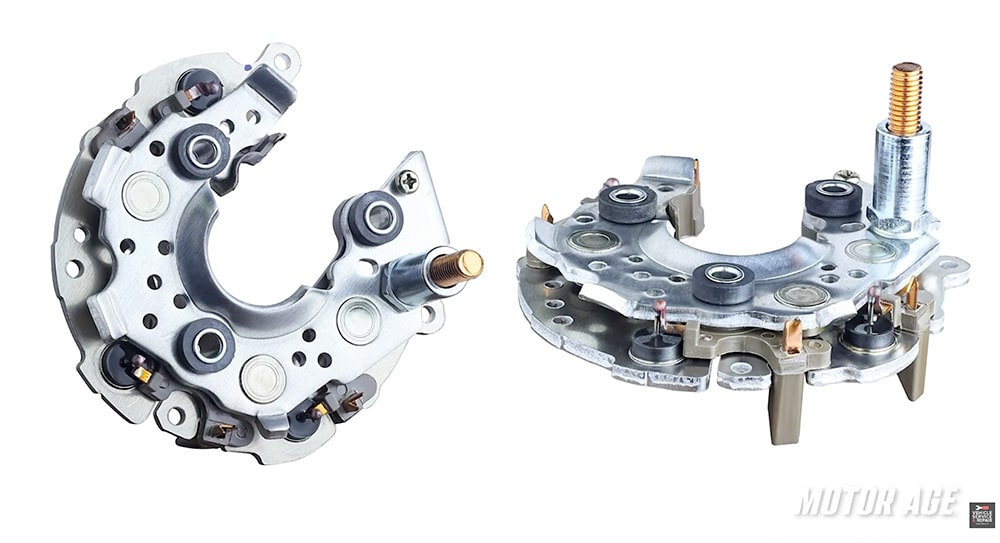
This is a topic that often gets referred to in a sort of sideways manner, name checked but seldom addressed as a topic of it own. Well, that’s not the case here, where we get what, in our opinion, is one of the best breakdowns of this phenomenon that has been published. Plus, it’s in the form of a video, making it much easier to consume and really absorb than if it was covered over 4 pages in a magazine.
Here, Erik Screeden from Motor Age (VehicleServicePros.com) addresses why simply checking alternator output voltage is insufficient when trying to get to the bottom of an intermittent electrical system problem. He starts by explaining exactly what AC ripple is and what causes it, with specific detail. This includes noting that all alternators produce some level of AC ripple as well as which alternator component failures result in excessive ripple.
He reviews the impact of excessive AC ripple on today’s sensitive electrical systems and their many components before jumping in and addressing how to test for excessive ripple. He notes the importance of testing as close to the source as possible and avoiding testing at the battery, which could lead to inaccurate measurements. He also compares the merits of testing with a multimeter vs a scope.
This really is an excellent dive into the causes and impacts of excessive AC ripple within the electrical system.
Start-Stop Starters – What Makes Them Different?
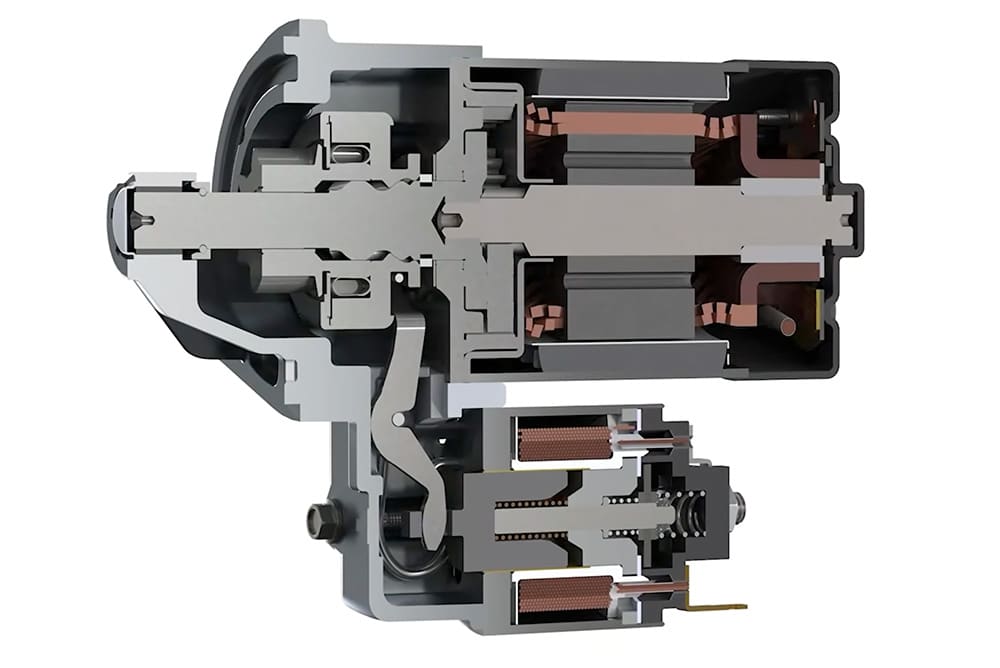
In this quick article on UnderhoodService.com, Andrew Markel provides an overview of Start-Stop system starters. As we all know, a vehicle equipped with a Start-Stop system is required to fire the engine many more times per trip than a vehicle with a traditional electrical system. That means tremendously more wear and tear on the starter. Markel identifies the way the construction of a Start-Stop system starter differs from a traditional design, identifying the enhanced construction that allows it to stand up to the harsher usage patterns.
He then gets into the interesting part, discussing the diagnostic implications of these designs: “Technicians also need to look at the starter as only one part of the system. A stop/start vehicle is calibrated around battery condition, charging strategy, battery monitoring and restart speed. Most of these vehicles are equipped with AGM or EFB batteries because a conventional flooded battery cannot tolerate the repeated cycling the same way. If battery state of charge, battery type or battery registration is wrong, it can affect stop/start operation and place additional stress on the starting system.”
Finally, he covers the importance of matching replacement parts to the quality level / duty cycle of the part being replaced during a repair. This could include any number of items, such as the starter, battery, belts and more, with a special emphasis on starter replacement. It’s a great starting point for diving deeper into these starters.
The ESS Dual Battery System – A Great Summary
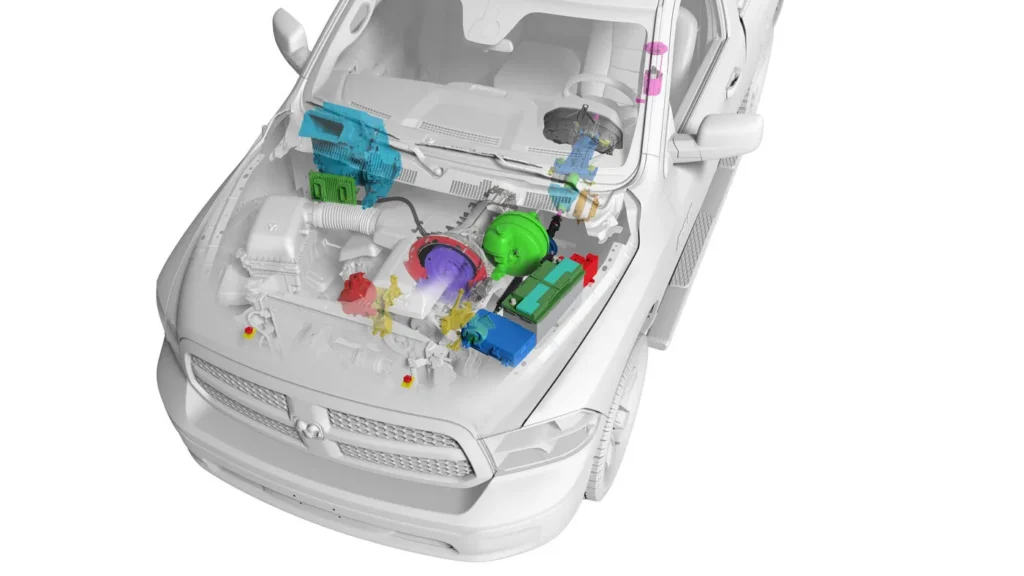
Here’s another one by Andrew Markel on UnderhoodService.com, where he outlines the Chrysler, Dodge, Jeep ESS Dual Battery System: what it is, what it does, how it does it and how technicians should engage with it and diagnose it. He first identifies the nature of this dual battery system (main side and auxiliary side) and key system components.
He then takes a deep dive into how this system monitors battery health, using an intelligent battery sensor in the negative cable on the main battery, and how this monitoring information is passed through the system via the vehicle’s communication networks. He also spends quite a bit of time discussing the auxiliary battery, including how it is connected to the overall system, noting that it is isolated from the main battery only during starting events. He then focuses on testing, jump starting and charging these systems. We especially like his emphasis on making proper vehicle connections: “Both batteries should be charged through the IBS so the sensor can accurately measure the charging current. Connect the charger’s negative clamp to the negative cable attachment at the IBS, the remote jump-start ground terminal if equipped, or a suitable chassis ground. Do not connect it directly to the negative battery post.”
He wraps things up with how the system handles low battery conditions, implements load shedding steps, and how it handles extreme discharge situations. He goes on to touch on the diagnostic steps to be taken during these situations. If you’re looking to brush up on these ESS-equipped vehicles, it’s a great read.
Electrical System Diagnostic Techniques
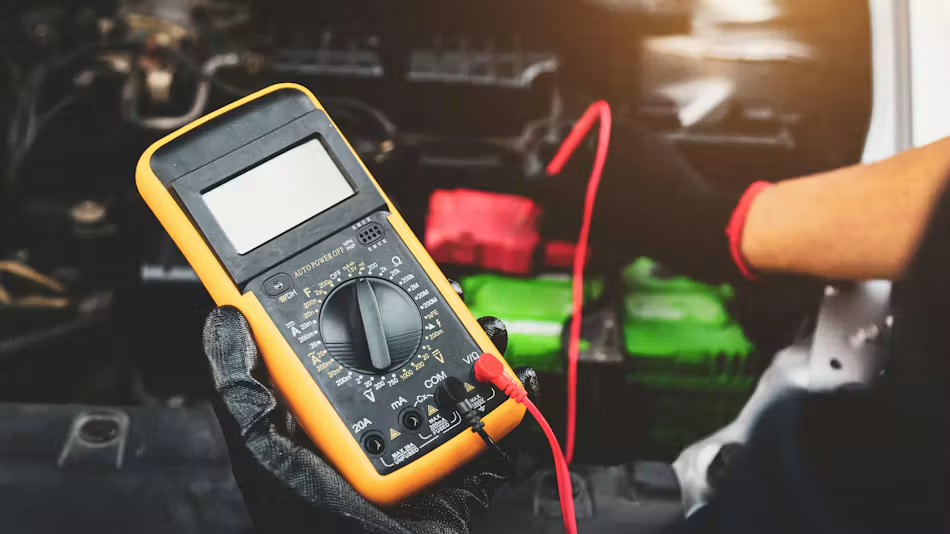
This article, by our old friend Scott Brown on VehicleServicePros.com, is a great way to wrap up this month’s article. Here, Scott provides a great framework for electrical system diagnosis and repair, touching on the key building blocks for a successful approach, many of which are common themes from the last 10 years of this blog. This paragraph really sums up the essence of the piece: “Electrical troubleshooting can be daunting, but when you understand how a circuit is designed, what each part is supposed to do, and why the system responds the way it does, you can break the circuit down and build your own test plan instead of leaning only on a trouble tree that may or may not lead you to a solution.”
And he does just that, starting with the basics and building from there. Similarly to the first piece referenced above on AC ripple, he starts by showing how, with batteries, voltage doesn’t equal capacity. He provides tips on avoiding that trap while emphasizing how the battery is the foundation of the electrical system. The then moves into voltage drop testing, its ability to find lurking problems that checking voltage alone won’t identify and the need to always check both sides of a path, power and ground. Then, he covers checking 5V reference circuits because of their importance to component and system function, before wrapping everything up with a great case study.
As always from Scott, the article contains great information for everyone from a new tech to an experience tech. We strongly recommend this one.
The PRO-LOGIX PL2320: An Electrical Troubleshooting Sidekick

The PRO-LOGIX PL2320 from Clore Automotive is an excellent tool for busy technicians, providing 6/12V charging to a wide variety of battery types, plus 12V power supply mode to support a range of diagnostic, repair and maintenance applications on modern vehicles.
There was a time when grabbing a charger was a reactive event. The vehicle won’t start – grab the charger. Battery is low, lights were left on – grab the charger. While a battery charger is still used in these instances, it is now being asked to do so much more, specifically, to provide a steady source of power to keep the vehicle’s electrical system in a stable condition or voltage range while other tasks (which would otherwise drain the battery) are being performed. That’s the nature of Power Supply Mode.
The PL2320, when connected in PS Mode, it will hold system voltage at ~14.1V, providing whatever current is needed, from 0-20A, to hold that level. It essentially only gives what the system needs. If there’s very little demand on the system, the charger will provide a small output. If there is significant system demand, it will output more, up to 20A. This is ideal to support the vehicle for diagnostic purposes, such as chasing down an intermittent electrical system issue. It’s also perfect for supporting the vehicle during on-vehicle repairs, such as repairs to an electronic braking system. It can even support a range of ADAS recalibrations. That’s why we like to say, “Hood goes up, charger goes on.” On today’s vehicles, the last thing you want to do is inadvertently drain the battery, which can have numerous negative consequences.
And, oh, by the way, the PL2320 is an excellent battery charger as well.
• 6/12V operation
• 20/10/2A charge rates
• Properly charges Flooded. AGM, Spiral and Deep Cycle lead acid, plus LiFePO4 lithium, batteries
• Automatic, precise, multi-phase charge routine
• Temperature Compensation to adjust the charge profile in extreme heat or cold, protecting battery health by eliminating overcharge situations in high heat environments and undercharge situations in low temp environments
• Forced Start Mode to initiate charging on batteries that have dropped to 0.0V, recovering units that a less capable charger would write off entirely
• Soft Start Mode for severely depleted batteries and packs, it applies reduced current to safely raise the battery/pack charge level until the battery can accept a full-power charge without damage to the battery
• Battery Repair Mode to overcome sulfation on older or distressed batteries, restoring reserve capacity
• Reverse polarity protection and battery fault detection to prevent damage from connection errors and identify failed cells before they waste service time
How about your operation? Do you have any tips and tricks to make electrical system diagnosis more effective or efficient that you’d like to share with your fellow readers? We always amazed by the expertise and ingenuity of our readership. We are sure that our audience would really appreciate your insight.