

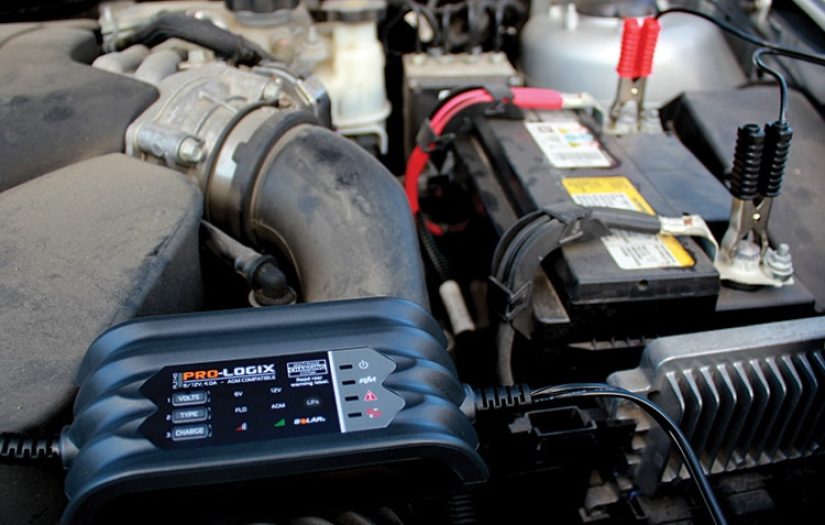
This month, we’re revisiting and updating an article that covers preventive maintenance charging. In these times, where everything seems so expensive, preventive maintenance charging is a great way to help you get the most from the hard earned dollars you invest in your batteries. We talk to vehicle owners every day about the challenges of keeping their car, truck, SUV or van road worthy and reliable. One of the most common topics in those interactions is related to preventive maintenance charging. For sure, this is a top topic for our customers, so we brought it back around for another look.
Preventive maintenance charging is a great topic and one that we love to talk to customers about. It’s a useful exercise, whether you drive your vehicle every day or only occasionally, as we will get into in a moment. It’s also useful regardless the size of the vehicle or equipment to be serviced. Finally, it is a process that delivers value all year round. There are many ways that it delivers real value to end users, professional and consumer alike, but today we are going to focus on three key benefits for vehicle owners.

The first key benefit is to the general long-term health and longevity of your battery(ies). Regular charging of any lead acid or LiFePO4/LFP lithium starting battery type, using a quality smart charger is very beneficial for battery health. As a battery expert friend of Clore’s has noted on numerous occasions (Hey Bill!), driving patterns can be quite detrimental to battery health, especially when the vehicle is primarily driven for short trips. This often leads to an undercharge, or excessive discharge, condition, which invites sulfation and battery deterioration.
In addition, the significant amount of electronic drain on the battery in late model vehicles during operation (which largely didn’t exist twenty years ago) can also result in the vehicle’s battery often being short charged, with the same adverse impact as the above scenario. In other words, many factors are working against your battery’s health. Regular charging (every 3-6 months, depending on your specific situation) can go a long way toward negating these impacts, again assuming that you are using a quality charger that features temperature compensation and a battery repair mode.
I cycle through my vehicles every three months, preventive maintenance charging each one, and believe it is the reason why I get as much as a five year lifespan from my batteries, despite the brutal Kansas City summer heat. Remember – summer heat is especially damaging to your battery’s internal chemistry. Our expert friend, who is even more diligent than I am, has reported even better results over the last ten years, with his PRO-LOGIX charging routine significantly increasing the life of his batteries. This is despite the fact that he lives in an area of temperature extremes and that his family’s primary vehicle usage mode is “short trip” usage, which is the worst for battery health.

The second benefit is related, but worthy of standing on its own as a key point. This one is very simple. Batteries are very expensive these days. Back when Clore was formed in 2001, a decent replacement passenger vehicle battery could be had for $75-$90. As we all know, those days are long gone. A quick survey of retail outlets shows that a quality Group 27 flooded lead acid battery will set you back between $150 and $240. If you choose an AGM replacement, it will cost much more. So, it is totally worthwhile to invest in a simple process (preventive charging) that could extend the life of your battery one, two, or even three years, depending on several variables.
Separately, worn out or depleted batteries are very taxing on the rest of the system, particularly rotating electrical components like the starter and alternator. The professional literature is awash with articles and case studies highlighting spent alternators that met their demise due to a bad/weak/compromised battery. Keeping your battery well charged and in good health helps to avoid wear and tear on these critical components, which can be expensive to diagnose, repair or replace. If the $200 required to replace your vehicle battery sounds bad, wait until you see the bill for an electrical system overhaul.

Finally, preventive charging and battery maintenance is absolutely critical for seasonal use vehicles and the battery(ies) that power them. The absolute worst thing you can do for your seasonal equipment (motorcycles, third cars, wave runners, boats, ATVs, riding mowers, tractors – you name it!) is to let them sit unattended all winter long with the battery(ies) self discharging. We can’t begin to tell you how bad that is for your battery(ies). Even if they do start your equipment come spring, which is at best a 50/50 proposition, you will have significantly reduced the lifespan from those batteries.
Keeping the battery connected to a quality battery maintainer during periods of non-use (whether that occurs for you in winter or any other time of the year) is a much better option. First, it ensures that your equipment will start when you are ready to use it. Second, it is great for your battery and its long-term health. Third, it will save you tons of money over time. We all know that seasonal use “toys” typically involve a lot of batteries. If you could extend your battery replacement cycle by two to three years, the cost savings would be significant. We have a customer who owns a cottage in Michigan who has multiple boats and personal watercraft. Their total battery investment easily exceeds $1000. With regular preventive maintenance charging and off-season maintaining, they have been able to extend the life of their battery fleet by two to three years. That results in a huge savings, not to mention the hassle saved by cycling through their batteries far less over time.
Keeping your batteries in good health is what PRO-LOGIX is all about. With advanced features like specific charge routines for different battery types, temperature compensation, battery repair mode, soft start mode (for excessively discharged batteries) and an enhanced maintenance mode, beneficial charging with restoration of reserve capacity is delivered with each unique charging sequence. Whether you need an all-purpose charging solution, like our PL2320, a dedicated maintenance solution, like our PL2140, or a multibank solution to manage several batteries simultaneously, like our PL4050, there is a PRO-LOGIX model for every application need.
How about you? Do you regularly PM charge your batteries? For passenger vehicles, toys or other equipment? Do you have any secrets you’d like to share? Or, do you have questions related to this important maintenance step? We’d love to hear about it in the comments below.




2 Responses
I have a 2015 GMC Sierra 3500HD diesel pickup. It has 2 batteries. Most of my driving is short trips around town, 5 miles or less at a time. I have a Clore PL2320 charger but I’m considering purchasing a battery maintainer, maybe under-hood mount so can just plug in an extension cord without even lifting the hood. Since I have 2 batteries, do I need 2 maintainers? Or maybe the PL2320 would work just a well (except I’d have to lift the hood and only charge one at a time). I drive the truck at least 3 or 4 times a week.
George – Thanks for your question. We would recommend our model PL2140 for this task. The PL2140 is a 6 and 12 Volt charger/maintainer that comes with three output options, including a set of ring terminal connectors. Since your batteries are configured in parallel (making one large 12V battery), we would permanently mount your ring accessory as follows: positive ring connected the positive terminal of the battery farthest from the alternator and the negative ring connected to a good engine or chassis ground. Each time you wanted to charge, you’d connect the charger output lead connector to the matching connector on the ring terminal set. Then, start charging, matching the charger to the battery type installed in your vehicle. With 4A output, the PL2140 should be perfect to keep your two batteries in great shape until you are ready to use the truck again. We hope this is helpful. Thanks, Jim from Clore Automotive