

Heavy-Duty Battery Charging: Why It Matters and What to Look For

HD-snowplow-600px

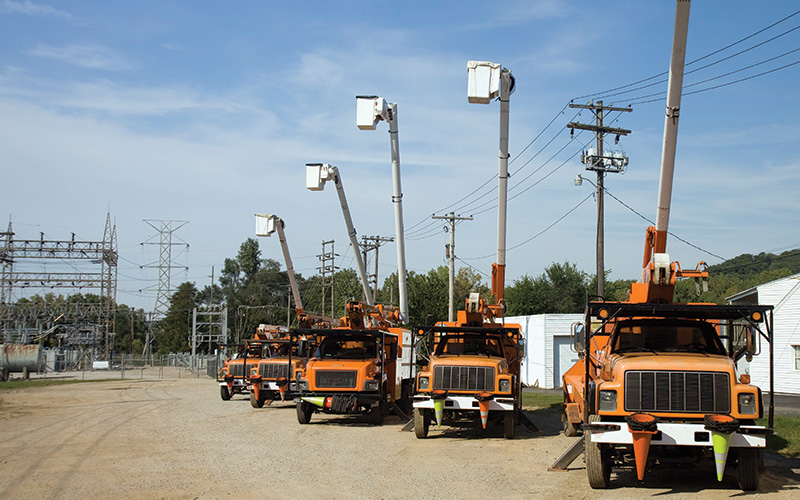
For a fleet maintenance operation, heavy-duty operation or for-hire HD service operation, few problems are more disruptive or negatively impact the bottom line more than a no-start event. The equipment is sitting idle, deliveries or other tasks are not being completed and there is a mad scramble to respond to something that, in most cases, was entirely preventable. Battery failure is a leading cause of no-start events and vehicle downtime incidences, costing fleets and operations deploying HD equipment an enormous amount per incident, once you factor in downtime, emergency service, towing and other costs.

The core problem in most of these instances is that heavy-duty commercial vehicles run multi-battery packs that require regular service, which is often either neglected or performed by equipment not up to the task of servicing them effectively. Over-the-road trucks, construction equipment, and agricultural implements typically contain four to eight Group 31 batteries wired in series or parallel (or a combination of both). Charging these packs quickly, safely, and effectively requires a purpose-built professional charger with the output, intelligence, and durability to handle the job every day.

Battery-related downtime events are not just a maintenance inconvenience. They are a financial event. Industry data puts unplanned vehicle downtime at $448 to $760 per vehicle per day, which adds up quickly for fleets running dozens or hundreds of pieces of equipment. It is estimated that 78% of fleet downtime originates from deferred maintenance and preventable failures. No-start events due to battery failure are a great example of this.

Why Commercial Vehicle Batteries Fail Prematurely

Heavy-duty vehicle batteries face a very difficult operating environment. The causes of premature failure in fleet and heavy-duty applications include:

• Chronic undercharging. Short-haul routes, frequent stops, and high electrical loads from telematics, lift gates, and refrigeration units prevent the alternator from fully restoring battery charge. Batteries that repeatedly cycle without reaching full charge develop sulfation, which permanently reduces capacity.
• Deep discharge events. Similarly, vehicles that sit overnight with accessories drawing power or that experience excessive parasitic drain can discharge batteries to damaging levels.
• Multi-battery pack imbalance. When a truck runs four to eight batteries in a bank, a single weak cell in one battery can degrade the entire pack. Without active charging that can identify and address individual battery conditions, a weak battery quietly pulls down the others.
• Temperature extremes. Cold temperatures dramatically reduce cranking power, while heat accelerates internal corrosion and water loss. Both conditions further stress batteries that may already be impacted by the above conditions.

What a Fleet Maintenance Shop Needs in a Heavy-Duty Battery Charger

Not every battery charger belongs in a fleet shop. Lesser-grade units lack the output, the battery intelligence, and the durability to handle the volume and variety of the charging requirements found in professional fleet or heavy-duty service environments. Over-the-road trucks typically run four Group 31 batteries in a 12V parallel pack, providing the massive cranking reserve needed to start large diesel engines. Some configurations even run eight batteries. Bringing a 30% discharged 4-battery pack (120A per battery) back to full charge at 40 amps takes over four hours. At 120 amp output, the same job takes less than two hours, a significant reduction and a length of time more consistent with the typical service window.

Some Class 6-8 trucks, school buses, transit buses, and construction equipment operate on a 24V electrical systems using two 12V batteries in series or four 12V batteries in parallel / series (2p2s). A charger limited to 12 Volt operation cannot service these vehicles and equipment. For a municipal yard, bus depot, or agricultural operation with a mixed voltage fleet, or for a for-hire heavy-duty service operation that needs to be able to effectively service whatever rolls into their shop, a professional fleet charging solution must be able handle both 12V and 24V battery configurations quickly, safely and efficiently.

Building a Battery Charging Protocol for Your Fleet Shop

Having the right charger is necessary but not sufficient. Shops that see the biggest reductions in battery-related failures and no-start events pair a capable charger with a consistent service protocol. Every vehicle in the fleet should be charged during each scheduled preventive maintenance event. Vehicles that run short-haul cycles are especially vulnerable to chronic undercharging and should be prioritized. This ensures batteries and packs are returned to full charge regularly (>95% State of Charge), interrupts the sulfation cycle before it becomes irreversible and gives technicians an opportunity to observe how each battery accepts a charge, which is itself diagnostic information. We also recommend deploying a diagnostic tester (like our BA327) during these service events to track battery useful life and better predict when replacement is necessary.

The PRO-LOGIX PL6850: Built for Fleet Service

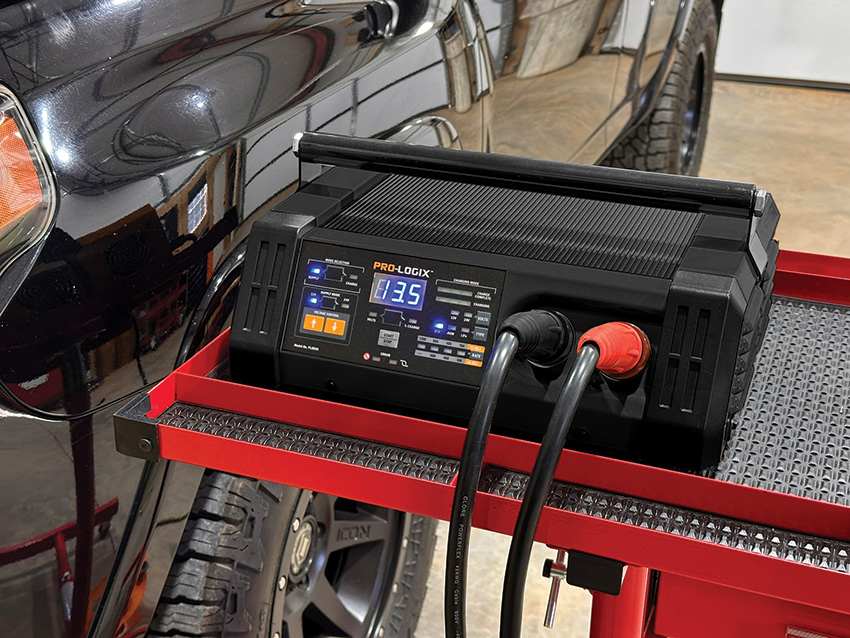
The PRO-LOGIX PL6850 from Clore Automotive is designed specifically to meet the demands outlined above. It is a professional-grade, 12/24V HD charger built around the operational realities faced by fleet maintence, heavy-duty service, dealership and for-hire mechanical service shops.

The PL6850 delivers a maximum charge rate of 120 amps in 12V mode and 60 amps on 24V mode, with selectable rates of 120/60/40/10A (12V) and 60/40/10A (24V). We suggest using the PL6850’s adjustable charge selection strategically. Not every HD vehicle needs 120A. Using the appropriate rate for the application extends battery life and reduces heat-related stress during charging.

The PL6850’s selectable charge rates give technicians control over the tradeoff between speed and battery stress:

• 120A for 4- and 8-battery packs
• 60A for single heavy-duty commercial batteries when time allows
• 40A for standard maintenance charging on most vehicle types
• 10A for conditioning, long-term maintenance or sensitive batteries


Often, captive fleets and equipment arrays are not uniform as to battery types deployed, not to mention the variety of equipment serviced in an independent for-hire service shop situation. A shop operation may encounter trucks and equipment containing conventional flooded batteries, AGM and Spiral Wound batteries and even LiFePO4 lithium batteries. For this reason, a truly useful HD charger needs to be able to charge a wide range of battery chemistries. The PL6850 can properly service Flooded, AGM, Spiral Wound, Deep Cycle and Marine lead acid batteries, plus LiFePO4/LFP lithium batteries. A single charger that properly manages all these battery types eliminates the need for multiple units and reduces the risk of applying the wrong charge profile to a sensitive battery chemistry.

In addition to versatility, the PL6850 is extremely effective and beneficial. It deploys a multi-phase, microprocessor-controlled charging sequence that adapts automatically to the condition of each battery or pack it services. Key adaptive features include:

• Soft Start Mode for severely depleted batteries and packs, it applies reduced current to safely raise the battery/pack charge level until the battery can accept a full-power charge without damage to the battery.
• Battery Repair Mode to overcome sulfation on older or distressed batteries, restoring reserve capacity.
• Temperature Compensation to adjust the charge profile in extreme heat or cold, protecting battery health by eliminating overcharge situations in high heat environments and undercharge situations in low temp environments.
• Forced Start Mode to initiate charging on batteries that have dropped to 0.0V, recovering units that a less capable charger would write off entirely.
• Reverse polarity protection and battery fault detection to prevent damage from connection errors and identify failed cells before they waste service time.

This is the difference between a charger that applies power and one that actually manages the battery/battery pack. In a fleet environment where some vehicles arrive with deeply discharged or neglected batteries, the adaptive modes delivered by the PL6850 translate directly into fewer battery replacements and reduced likelihood of no-start events.

The unit also doubles as a diagnostic power supply, delivering up to 0-120A on demand (12V mode) or 0-60A on demand (24V mode) to maintain system voltage during module reprogramming and ADAS recalibration. Voltage is adjustable in 0.1V increments from 13.1 to 14.9V (12V mode) or 26.2 to 29.8V (24V mode), with minimal voltage ripple (<100mV) to protect sensitive electronics during programming events.

The PL6850 features 13-foot #2 AWG output cables, long enough to easily reach the batteries and starting points of most commercial vehicles. Its PowerJawTM clamps are designed to provide improved access to hard-to-reach battery terminals and starting points. Output cables use welding-style connectors, making them field-replaceable if they sustain damage. An included carry handle makes it easy to move between bays or into a mobile service vehicle.

Requires 20A AC service. This is the one infrastructure consideration for shops adding the PL6850.

Ready to add the PL6850 to your shop? Visit the PRO-LOGIX PL6850 product page for full details or explore the complete PRO-LOGIX line to find the right charger for your specific needs.


One Response

Leave a Reply

Your email address will not be published. Required fields are marked *

Clore Story

E-NEwsletter

Recharge alerts

Related News