

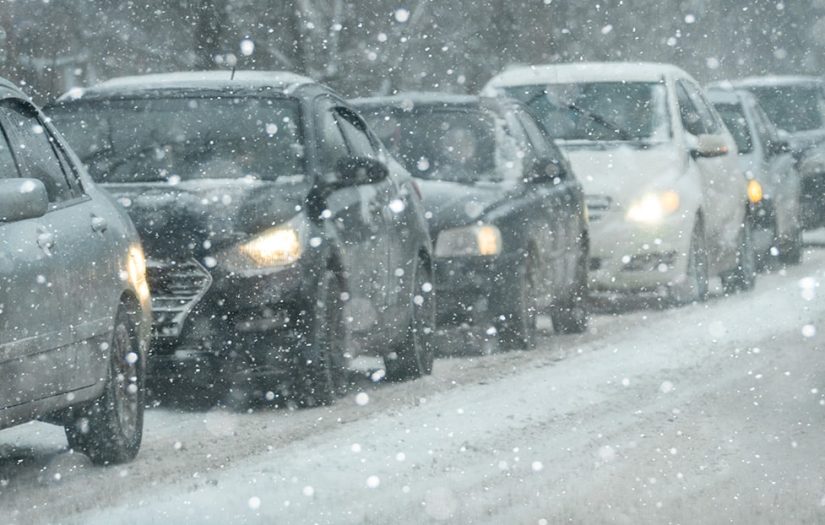
Many years ago, we published an article about how much better it is to use a jump starter when you are dealing with a dead battery than booster cables. In the last few weeks, as we have encountered extreme weather here in Kansas City, this advantage has really proven itself true and reinforced just how handy a quality jump starter can be.
We manufacture some really nice jumper cable sets and we know that they are the preference for some users and in certain specific applications, but when you stack up the positives of each approach, it’s really no contest. So, in light of just how awful the weather is right now, we thought we’d revisit the ways a jump starter is the superior choice, especially in extreme cold and snow.
In This Weather, Independence is Even More Important
No matter the weather, the top advantage of a jump starter is that you are fully self-sufficient when you have one, so when trouble strikes, you are not at the mercy of finding someone to help you out and let you use their vehicle as the host vehicle for a jump start. With your handy Booster PAC or Jump-N-Carry jump starter, you can quickly access your battery, make your connections, turn the key and be back up and running. It really is that easy.
This is particularly beneficial in an extreme cold weather and snow event. First, it’s no fun trudging around in freezing temps or slippery snow and ice looking for help. Second, as nice as some people can be (especially in KC), in extreme weather events, many people are looking to knock out their to-do list and aren’t overeager to get bogged down in a jump starting event. Plus, finding a good Samaritan often takes time, which is never fun when you’re freezing.
Lastly, in the office this week, we were talking about sending kids off to college with a set of booster cables, which really isn’t a bad idea. But, we’d suggest that a jump starter is the better option. Let’s face it, a dead battery never happens at an opportune time. But, add a college kid to the mix, and it’s likely to happen at the very worst time, including potentially late at night or when it’s very cold. In these cases, the peace of mind of knowing that they have what they need to overcome the problem, without the need to depend on the help of a stranger, is priceless.
In This Weather, Getting Close Can Be Difficult
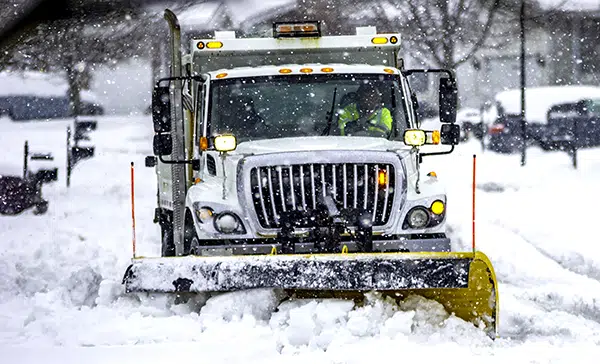
If you drive around much of the US this week, you’re going to find a lot of snow piles where the plows have pushed snow anywhere they could to clear the streets. That complicates many things, like finding suitable parking in busy urban areas, where that can be a challenge even on the best of days. It also can seriously complicate the process of getting a host vehicle close enough to make a booster cable connection.
In these conditions, many roads are tight to begin with and visibility can be difficult. That makes pulling a host vehicle up next to your dead car much trickier than under normal circumstances. It also makes it more dangerous to get a vehicle into a nose-to-nose configuration. All of this is eliminated when you have your handy jump starter at the ready.
In This Weather, More Starting Power is Needed
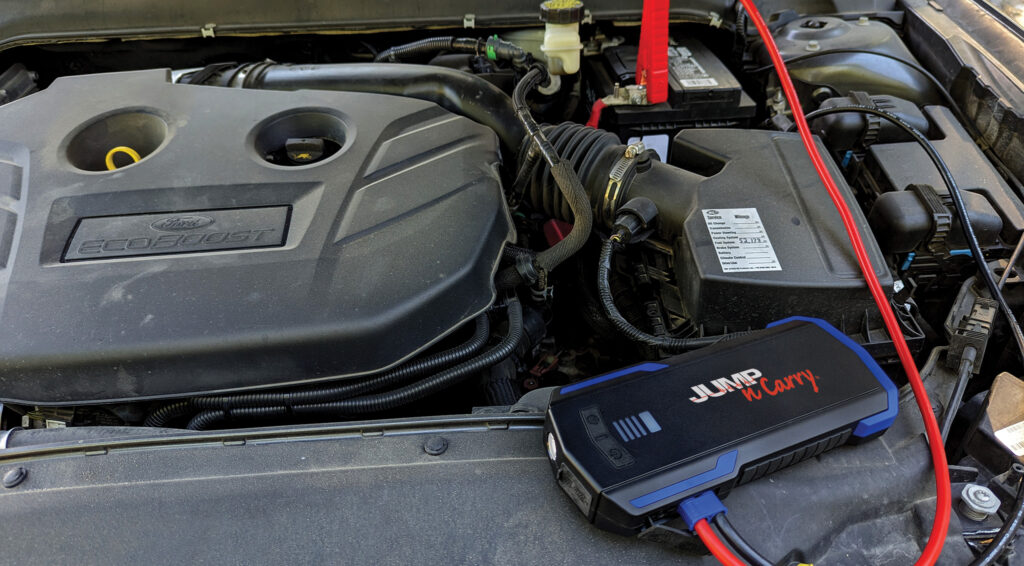
The reality of frigid temperatures is that it requires more power to start a vehicle than it does under optimal conditions. This is for two reasons. First, vehicle batteries are sensitive to temperature and effectively become less powerful as the mercury drops. This is true whether a given battery is a lead acid or lithium battery. Second, when the dead vehicle is sitting in extreme cold, it is more difficult to start, essentially requiring more oomph to power the starter and get the engine turning. These two factors are going to place additional stress on the host vehicle and its battery.
On the other hand, our Booster PAC or Jump-N-Carry jump starters are specifically designed to overcome the difficulties of extremely frigid temperatures. “Oh, it’s -30˚F right now… no big deal, let’s go!” is what the JNC660 would say if it could talk. The JNC345 would say the same thing at -23˚F. That’s why we say, We Tame the Cold Like Nobody ElseTM. Plus, our jump starters eliminate the possibility of over-taxing a host vehicle in the extreme cold, since there is no host vehicle when you use a jump starter.
In This Weather, Error Chances Rise
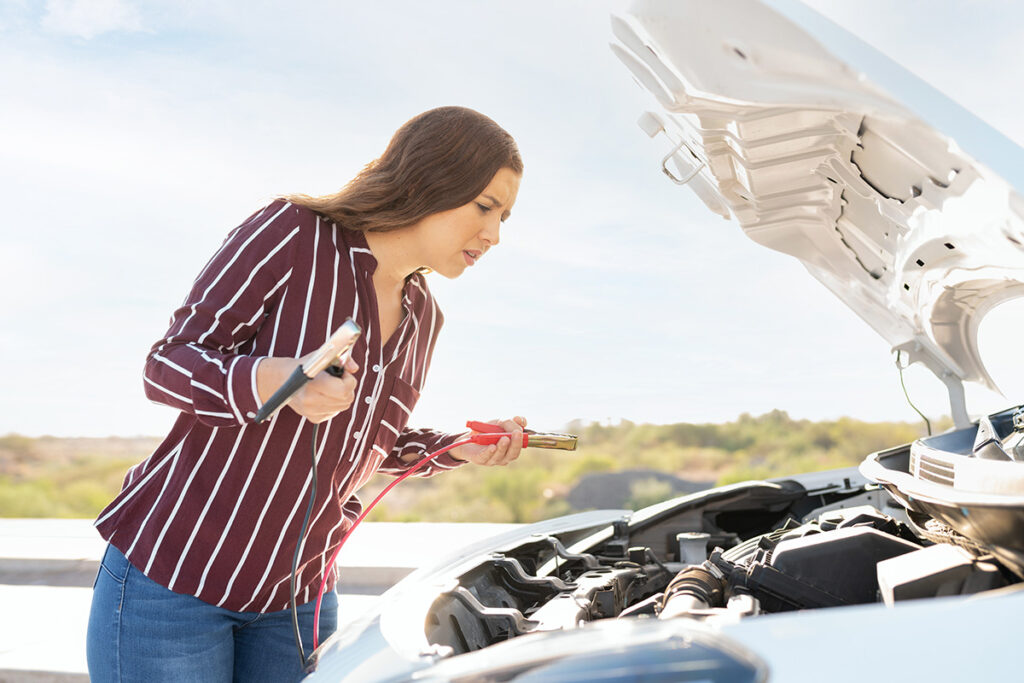
For many people, jump starting using booster cables can be a daunting task. They get confused by the order of operations and aren’t sure which negative cable should go to a chassis ground and which one should go to the negative battery post. With twice the connections, there’s a lot that can go wrong. Add in extreme weather and it gets that much more confusing and complicated.
With a jump starter, the application is significantly less complicated. Connect the positive lead to the battery’s positive post and the negative lead to a good engine or chassis ground and you’re ready to go. Do it twice and you’ll never not be ready to do it under any condition: snow, cold, rain, pitch dark, it doesn’t matter. It’s that easy.
In Any Weather, Vehicle Electronics are Sensitive

For our final reason why using a jump starter is a better way to go, we turn to something not specifically related to weather, but that is still important to mention. In fact, it is a far more relevant point today than we first touched on this subject nearly 12 years ago. Today’s vehicles are packed with dozens of computer modules and other sensitive equipment, on both the host and disabled vehicle, that could be damaged when booster cables are used.
For example, electrical noise from the host vehicle can be transferred to the disabled vehicle. This noise can include voltage spikes and other anomalies that could damage sensitive electrical and electronic components on the disabled vehicle. As a jump starter is essentially an extension of the vehicle battery, short of a reverse connection, this concern does not exist.
We Are All About Safety and Believe a Jump Starter is the Way to Go

In this weather, or any weather, the focus should be on safety. No matter how you’re performing a jump start, we recommend wearing protective eyewear and taking care not to short the battery posts. Even a low battery has the potential to create a big spark or cause a burn if it is short circuited. Always take care as to how you’re positioned if the disabled vehicle is near traffic and use flares (or our LNC330 LED Torch Light) to caution drivers to slow down while passing your area.
We’d also suggest that, for many of the reasons listed above and more, choosing to perform the jump starting application using a jump starter is safer than doing so using booster cables. Safer for the operator and the vehicle(s) involved.
Do you have a great/crazy/astonishing story about winter jump starter, either jumping your own vehicle or jump starting a customer’s vehicle? We’d love to hear about it in the comments below.



2 Responses
Be prepared with both a jumper battery and solid copper 4gauge or 2gauge 20 foot jumper cables, so someone can park behind you if need be. Copper plated aluminum jumper cables do not carry current as well as solid copper cables, and the thicker the wire, the better. Buy 4gauge or even the thicker 2gauge cables. Like any other batteries, jumper batteries do not last forever. Even the ES5000 jumper battery will not hold a full trickle charge after 5-6 years. Been there, done that. The AC wall charge will say it is fully charged, but when you try to use it, it may not start your car. I keep one jumper battery in my car, and the other one indoors on the included AC trickle charger. Use a handy gadget like the INNOVA 3721 Battery Monitor to see if the battery stays at 12.95 volts with the charger disconnected from the jumper battery. Connect the jumper battery or jumper cables to your car according to your car owner’s manual, as modern electronics can be fussy. I used to connect the negative wire to the engine block when engines were made of steel. Connecting a negative wire to an aluminum engine block may produce a white cloud of melting aluminum. Been there, done that also. After that, I used the negative battery post instead, as the owner’s manual was not available. As we used to say in the Boy Scouts, be prepared. Good
luck!
Daniel – Thanks for your comments. Lots of good advice. Yes, being prepared is the way to go. Thanks again, Jim from Clore Automotive