Over the years, we have written quite a bit about AGM batteries. That’s for several reasons: 1.) AGM batteries often require different service routines than traditional flooded lead acid batteries, especially when it comes to testing and charging, two topics that are near and dear to our hearts; there is quite a bit of confusion and misinformation out there related to this battery type, which we try to do our part to set straight; and 3.) AGM batteries have seen rapid growth in the North American car parc in the past 10-15 years, which means that our audience is encountering these batteries more and more, whether they’re a professional technician or a vehicle owner.
To provide a sense of just how AGM batteries are growing in popularity, here’s a quick excerpt from US AGM Batteries for Car Market, a December 2025 research report from Emergen Research. “The growing prevalence of start-stop systems in modern vehicles is a primary driver of the AGM battery market… According to the US Department of Transportation, the adoption of start-stop technology has increased by over 30% in new vehicles since 2020. This trend is expected to continue, with manufacturers increasingly incorporating AGM batteries to support the energy demands of these systems.”
So, if you’re servicing vehicles in a shop or dealership, you are definitely encountering a significant increase in the number of AGM-equipped vehicles in your bays. If you are a vehicle owner, it is just a matter of time before AGM batteries are part of your life, if you haven’t run into these batteries already.
So, what is it that you should know about these batteries? That’s the focus of this month’s article.
What is an AGM Battery and How is it Different?

If you talk to six people and ask what AGM stands for, you’re likely to get 6 different answers, especially when it comes to what the “A” stands for. We prefer the term Absorbent Glass Mat. Here’s a quick definition from Lifeline Batteries, Inc.: “AGM batteries function through a sophisticated design that sets them apart from traditional lead-acid batteries… In AGM batteries, a specially designed glass mat separator absorbs and immobilizes the electrolyte solution, allowing oxygen to recombine with hydrogen during charging, creating a maintenance-free sealed battery.”
Some of the advantages of AGM batteries vs flooded lead acid batteries are that they are maintenance-free, vibration resistant, provide better low temperature performance, are spill-proof and have a lower self-discharge rate. Despite this last advantage, we still caution you to charge your AGM battery every 90 days during periods of non-use. AGM batteries come in a wide variety of sizes and shapes and include traditionally shaped AGM batteries, Spiral Wound AGM batteries, Start-Stop AGM batteries and Deep Cycle AGM batteries, just to name a few. The good news is that battery manufacturers are doing a much better job of identifying these batteries as AGM construction, which helps to remove the guesswork, as in, “What type of lead acid battery is this?”
Stop Me If You’ve Heard This One Before – You Need an AGM-Optimized Charger

We’ll get this one out of the way first, since, if you been with us for any length of time, you are likely sick of hearing this mantra from us. It is very important, though.
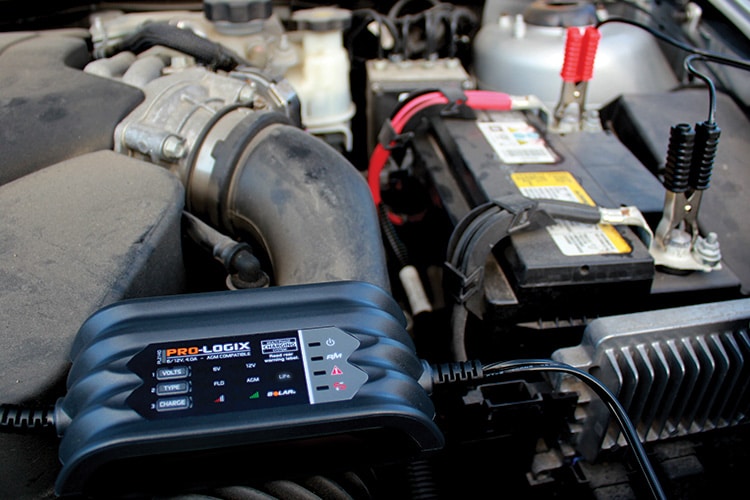
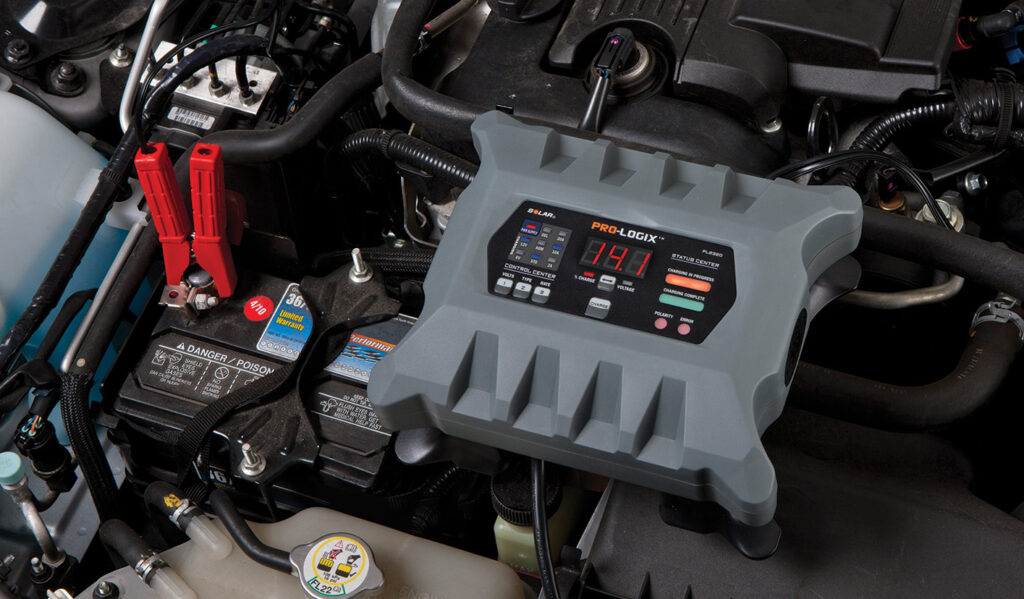
Any time you are servicing (charging or maintaining) an AGM battery, it is in your best interest to use a quality charger with an AGM-specific charge profile built into it. AGM batteries are very sensitive to voltage – deploying a flooded battery charge profile on one will raise the internal voltage above the recommended limit, which will cause damage to the battery. This is especially true when charging an AGM battery using a flooded profile at high amperages (+20A) or for the long duration charging that happens when maintenance charging seasonal use vehicles (even at low amperage).
Testing AGM Batteries – Same Story (sort of)
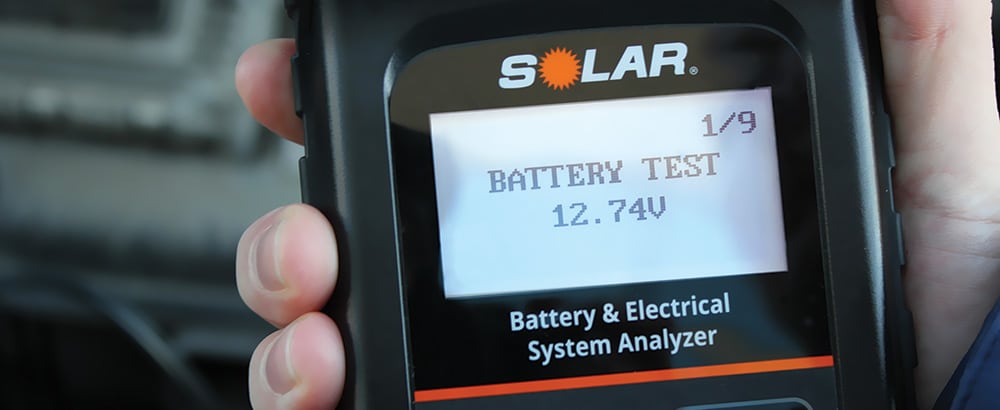
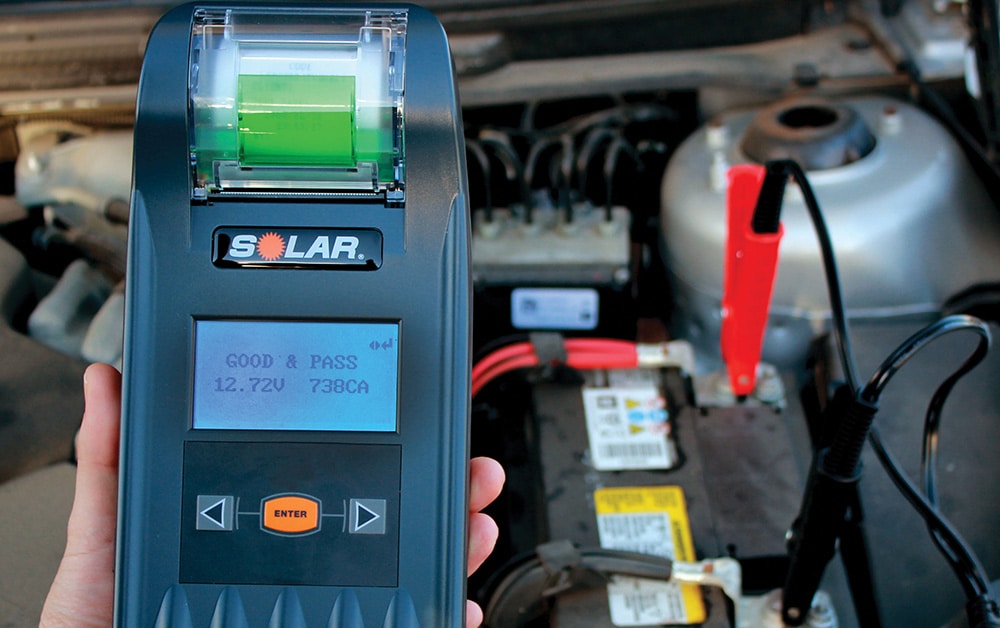
If you are testing AGM batteries using an electronic (conductance-style) battery tester, it’s the same story as charging. The electronic tester should have AGM-specific testing regimens. This is because AGM batteries have lower resistance than flooded batteries and will react to the electronic pulse of a digital tester differently as a result. In fact, our electronic battery testers feature three different AGM testing regimens – standard AGM, Spiral Wound and Start-Stop AGM. Each of these AGM battery types are different enough that, if you want an accurate assessment of battery health, they need their own testing regimens.
If, on the other hand, you are testing AGM batteries using a traditional invasive load tester (carbon pile or fixed load), there isn’t really a way to modify or adjust the testing regimen based on the battery type. Proponents of this testing style would say, “Good. I just want to know if the battery can hold a load.” This makes perfect sense, but we would caution that AGM battery “end of life” doesn’t look the same as that of a flooded battery. So, using a digital testing process can sometimes spot a lurking problem in an AGM battery when an invasive load test would indicate that the battery still has the required capacity. In fact, many shops use a combination of digital testing plus carbon pile testing to get the most accurate assessment and deliver high customer satisfaction (customer is told the battery is good, but it later turns out to be bad, and vice versa).
What About Jump Starting?
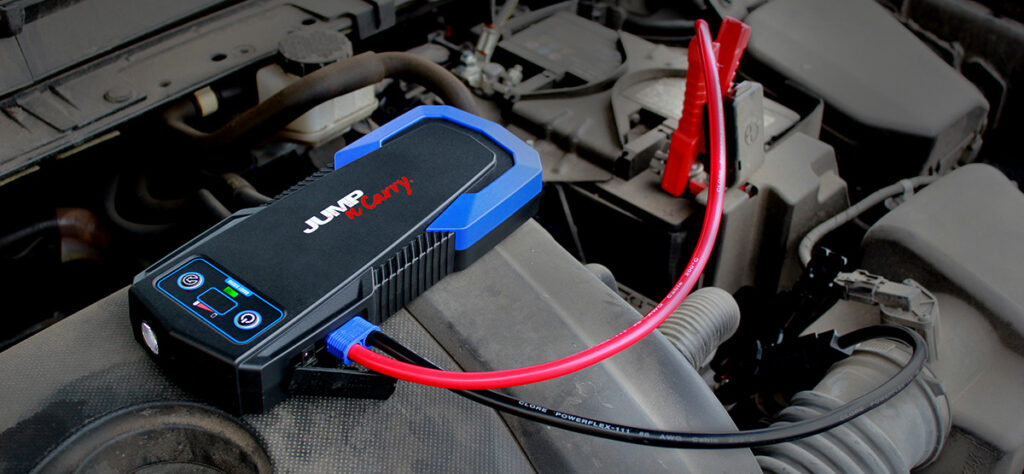
Jump starting is very different than battery charging and maintaining. When jump starting, you are essentially augmenting the vehicle’s starting battery, adding capacity to overcome its low energy condition. In this sense, when jump starting, you aren’t really “pushing” energy to the vehicle’s battery, like a charger does. So, you can use an AGM (SLA) jump starter to jump start a vehicle with a flooded, AGM or lithium starting battery. Similarly, you can also use a lithium jump starter to jump start a vehicle with a flooded, AGM or lithium starting battery.
Of course, we have to mention safety whenever we’re talking about jump starting.
! Always wear safety goggles when working around vehicle batteries.
! Always inspect your jump starting equipment to be sure it isn’t compromised by damaged components, such as frayed output cables or problematic clamps.
! Always make sure that your jump starter’s operating voltage matches that of the vehicle under service.
! Lastly, always be sure to connect the negative lead to a good engine or chassis ground, not the vehicle battery’s negative battery terminal.
All of these safety tips apply to charging events as well, including “negative goes to ground.”
What Should I Know About Replacing the Battery in My Vehicle?
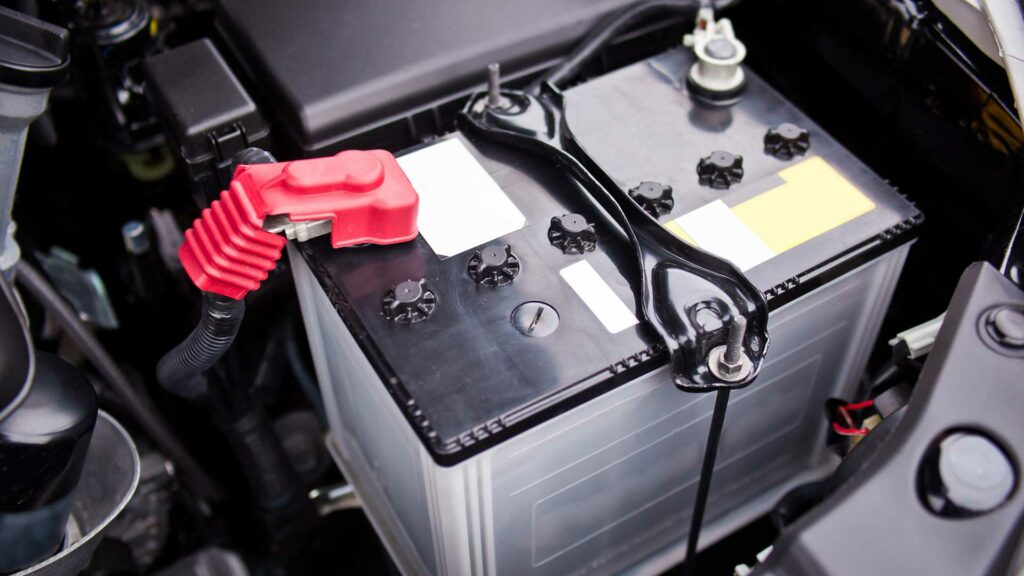
Generally speaking, the consensus is to always replace your vehicle battery with a like battery: size group size, battery type, power capacity, etc. Specific to the AGM question, vehicle manufacturers and battery suppliers both caution against downgrading from an AGM battery to a standard flooded battery when choosing a replacement. This is because an AGM has different properties, especially when it comes to managing vehicle loads and deeper discharge conditions, particularly in vehicles with Start-Stop systems. So, if the original battery is an AGM, is always best to replace it with an AGM.
Going the other way is slightly more complicated. We have seen many references that say it’s OK to upgrade from a standard flooded battery to an AGM when the time comes for replacement. This is definitely safer than downgrading, but it is not a simple answer. Many older vehicles have charging systems that reach higher voltage levels than what an AGM battery should be exposed to. Our suggestion is to do your homework before making this switch. In many cases, you will be fine. But, in some cases, the AGM will be exposed to excessive voltage (for it), which will reduce the useful life of the battery. So, it might not turn out to be the upgrade you thought you were getting.
When it Comes to Managing AGM Batteries, We’ve Got You Covered
At Clore Automotive, we have been delivering best-in-class AGM battery service equipment for 20+ years. We know AGM batteries, what they need and how best to interact with them. That mean our solutions offer the precision needed to properly assess and service AGM batteries, effectively, efficiently beneficially and safely. Here’s a quick list of our products designed to help you execute optimal AGM service applications:

Do you encounter tons of vehicles equipped with AGM batteries in your shop? Have you seen the prevalence of AGM batteries in your customers’ vehicles increase in the last 6-10 years? Do you have any tips or tricks you would like to share with your fellow readers? We (and they) would love to hear about them in the comments below.