

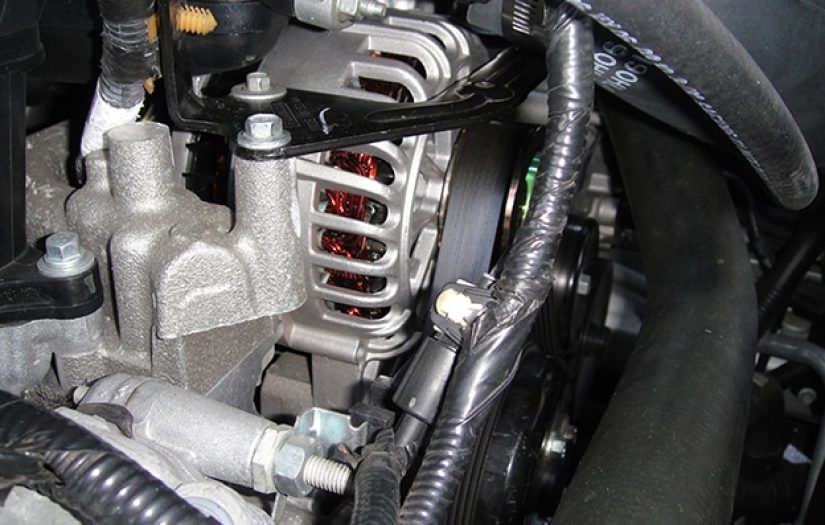
It has been several months since we did a survey article, gathering worthwhile industry articles and videos related to a specific vehicle service topic in the hopes that we can save you the homework time and provide you with some tips and tricks to make your life easier. So, we thought we’d get back on the bandwagon, this time revisiting our old friends, the Starter and the Alternator. As we have stated in the past, in an ICE vehicle, these two components work with the battery to form the three legs of the electrical system stool. If any one of them is compromised, it will like impact the others in an adverse way. Let’s jump right in.
Covering the Basics
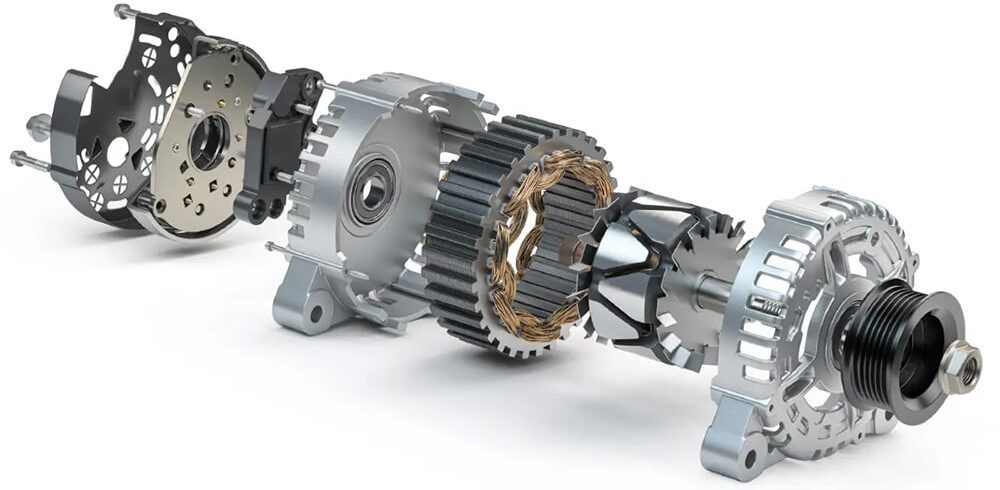
This article by the team at UnderhoodService.com provides a great starting point on this topic. They talk about how issues related to rotating electrical components (starters and alternators) become more prevalent as vehicles age and how the rapidly aging US vehicle population likely means more starter/alternator diagnosis is in the future for US shops.
They go into the causes of rotating electrical component failure as well as some telltale signs that a vehicle is suffering from an issue that has its root cause in the starter or alternator. They then go on to suggest some key diagnostic steps:
• Performing a visual inspection is the first and simplest technique when diagnosing a vehicle to narrow down the possibility of certain issues, giving technicians the opportunity to identify signs of physical damage, corrosion, loose parts, leaks and more.
• Electrical testing should come next, like measuring the voltage and current levels, insulation resistance testing and motor circuit analysis.
• Leveraging diagnostic tools to quickly identify DTCs can expedite the diagnosis, confirm findings from previous troubleshooting techniques and document the repair process.
The above suggestions are a great start. Based on previous articles and research we have done on this topic, we would also suggest consulting the vehicle’s electrical schematic, checking power and ground to all system components and being sure that you have a thorough understanding of system operation before starting your diagnostic effort. For many of our audience, this article may be a bit basic, but for others just getting into this area of vehicle diagnostics, it could be a very useful starting point.
Deeper Dive on Alternator Diagnosis
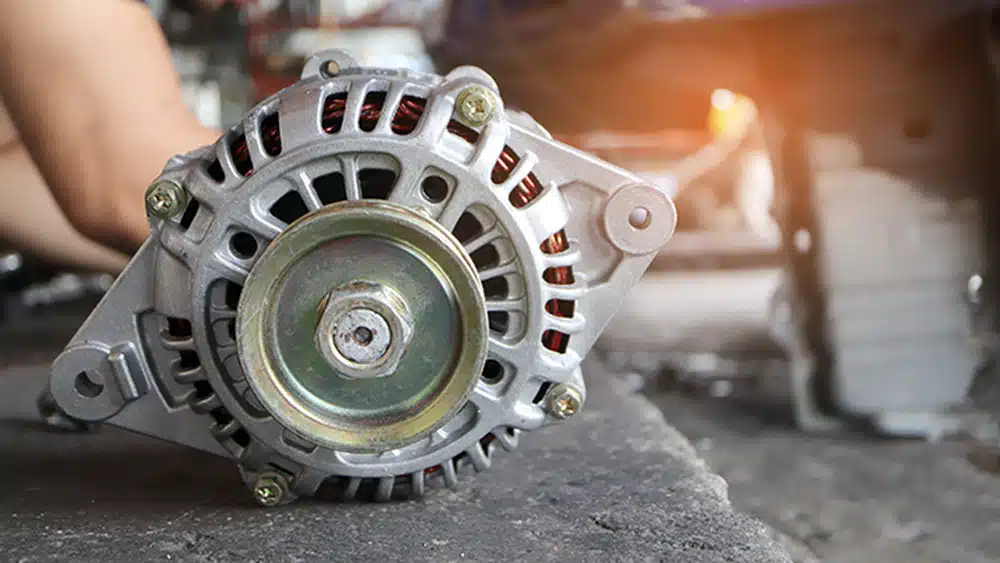
In this brief but worthwhile article on UnderhoodService.com, Larry Carley takes a deeper dive into alternator function, failure modes and diagnostic tips related to them. While this article is older, it does a good job of presenting the issues shops face when servicing this key component.
After reviewing alternator function and the impact poor alternator performance can have on the vehicle, he provides several diagnostic steps shops should consider as they diagnose charging system issues. One great example is, “Switch your DVOM to AC [mode] and check the voltage again. If all of the diodes are doing their job, there should be no AC voltage reading at the battery. If you get a voltage reading, it means one or more diodes are leaking and the alternator needs to be replaced. Leaking or shorted diodes can often cause a visible fluctuation in the output voltage of the charging system. Bad diodes can also allow current to leak from the battery back through the alternator to ground, causing the battery to run down overnight.”
He then goes into causes of alternator misdiagnosis, emphasizing the importance of voltage drop testing as a critical tool for technicians as they try to determine if the alternator is or is not the root cause of system issues. He provides a set of test points for checking that there aren’t voltage drops that are impeding proper alternator output. It’s a good reference article worthy of a bookmark, in our opinion.
Getting Granular on a Sprinter Van Diagnosis
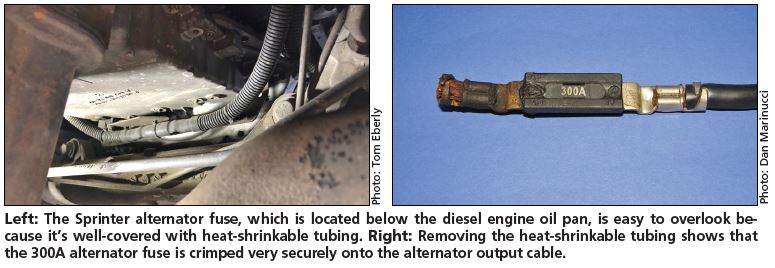
OK. This one is very specific, but it does a great job of illustrating the importance of understanding the working details of the system under diagnosis, having a complete set of wiring schematics for the system and not assuming you have the answer before you’ve done the testing to confirm your diagnosis. In this article on motor.com, their team reviews a tricky aspect of Mercedes Sprinter Van charging system design, in which a high capacity fuse is spliced within the alternator output cable, which, by the way, is routed to the starter solenoid, not directly to the battery positive terminal.
That’s a lot to take in. But the article, written in conjunction with Larry Hagemeister, an experienced autoelectric specialist, does a good job of walking through the system design and the service implications of it. Of course, it’s not a simple problem to solve (are they ever?) due to the complexity of the cable splice and the fact that an OE replacement cable assembly, complete with inline fuse, is no longer available. But, they run through the available options, providing critical things to keep in mind for each option. If you think you may be encountering these vehicles in the future, or have in the past, this is a very useful article.
TSBs Related to Battery/Electrical System Performance

We’ll wrap this review of rotating electrical service concerns with a few TSBs, both of which reinforce the inter-related nature of electrical system issues. Yes, in many cases, low battery voltage conditions and no start complaints are the result of problem alternators or starters. But, they can also stem from other root causes that technicians shouldn’t look past.
Here’s a recent (April 2026) TSB from GM related to 2022-2025 Cadillac Escalade and Escalade ESV vehicles, where some vehicle owners report odd MIL messaging and possible P0606 and P0562 DTCs being set. GM cautions shops and technicians that these issues, which result from a low voltage condition, are more prevalent in colder areas and that techs should “Test the battery and replace if necessary. Inspect battery cables, engine harness junction/fuse block and battery fuse block connections. Inspect the charging system and check for parasitic losses.” So, for the most part, they seem to be emphasizing cable connections as the most likely root cause vs the alternator itself.
Here’s a second recent (March 2026) TSB, this time from Mercedes, related to low voltage conditions on 2022-2026 AMG GT and AMG SL models. Here, the root cause is excessive parasitic drain caused by the drivetrain control module. And, the recommended fix is a software update.
The most interesting thing about this one is the additional note from import-car.com: “That matters because battery-drain complaints on newer European vehicles can quickly turn into long diagnostic rabbit holes. For the independent shop, this bulletin is a reminder to consider factory campaign or module software status before assuming a bad battery, an alternator problem, or an elusive parasitic draw elsewhere in the network.”
[Also, a quick note on this TSB. It is listed among several TSBs referenced in this roundup by import-car.com. To see this one, scroll down to the second section headed “MERCEDES-BENZ: BATTERY DRAIN AND CODING CHANGES TAKE CENTER STAGE.”]
BA327: A True Resource When Battling Electrical System Issues
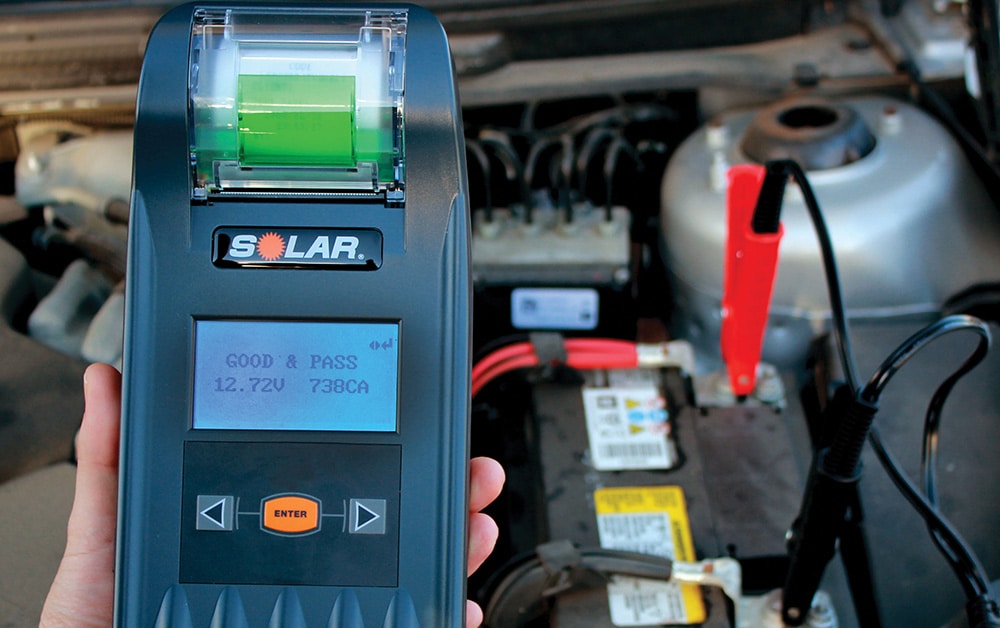
When you are stuck in the diagnostic rabbit hole of rotating electrical component issues (and electrical system diagnosis in general), it helps to have tools and equipment you can count on to support you all the way to the conclusion of a successful repair. A great resource in this ongoing battle is our BA327, Digital Battery and System Tester with Integrated Printer. The BA327 can provide valuable feedback related to all three critical areas of the vehicle’s electrical system: battery analysis, starting system assessment and charging system output assessment.
The BA327 can quickly and accurately test 6 different types of 6 and 12 Volt batteries: Flooded, AGM Flat Plate, AGM Spiral Wound, Gel Cell, Start-Stop AGM and EFB batteries. It has a testing capacity of 40-2000 CCA, so it can test everything from powersport to Group 31 size batteries and beyond. It features temperature compensation for accurate battery assessment in all conditions. It also can test against multiple battery rating systems, including CCA, CA, JIS and DIN. It also has testing regimens allowing it to assess starting system performance and alternator output, including providing a value for ripple detection, which is critical, as discussed in the above articles.
The BA327 features extra-long 10’ cable leads for easy connections on all vehicles and the ability to operate the tester from the driver’s seat on most vehicles when performing system testing. It features field-replaceable cable ends for easy swapping out if a clamp gets damaged. It includes side terminal adapters, a roll of printer paper and a handy blow molded storage case for safe, secure transport and storage.
Have you ever had a tricky electrical system diagnosis related to starter or alternator function? Ever had a vehicle where nothing seemed to solve the problems and then, boom, you locked in on a solution? We’re sure your fellow readers would love to hear about it in the comments below.




2 Responses
So what is the difference between BA327 and the BA427. I have the BA427
Oliver – Thanks for your question. The main differences are testing capacity (BA427 tests up to 3000 CCA while BA 227 tests up to 2000 CCA), temperature compensation method (direct acquisition with BA427 vs choosing a range with the BA327) and the fact that the BA427 allows connection of an amp clamp and volt probe. Thanks again, Jim from Clore Automotive